by Ogbeni Olawale Dawodu
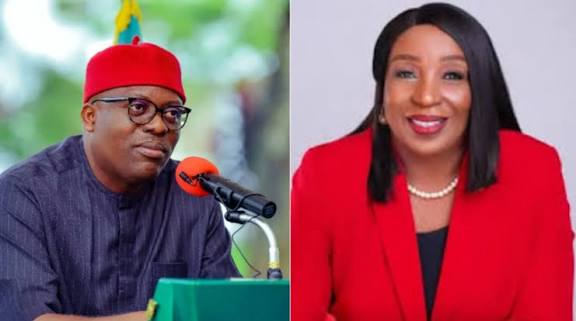
PORT HARCOURT – Tension eased across Rivers State on Thursday as the Rivers State House of Assembly formally withdrew impeachment proceedings against Governor Siminalayi Fubara and his deputy, Prof. Ngozi Odu, following the intervention of President Bola Tinubu.
The decision was taken during plenary in Port Harcourt, where lawmakers unanimously resolved to discontinue the removal process in line with resolutions reportedly reached at high-level reconciliation meetings in Abuja involving key political actors.
Announcing the development, Speaker of the House, Martin Amaewhule, said the Assembly acted in the overall interest of peace and stability in the state.
“The House has resolved to withdraw the impeachment notice against the Governor and his Deputy in the interest of peace, stability and the development of Rivers State,” Amaewhule stated.
He added that the Assembly would now return fully to its constitutional duties.
“Our focus henceforth will be on lawmaking and oversight functions. The prolonged political tension has slowed legislative activities, and it is time to move forward,” he said.
Amaewhule explained that suspending the impeachment proceedings became necessary to de-escalate mounting tension that had polarised the political class and created uncertainty within the governance structure of the state.
Months of Political Turmoil
At the height of the crisis, the state witnessed parallel sittings by rival lawmakers — a faction loyal to Governor Fubara and the majority aligned with the Minister of the Federal Capital Territory, Nyesom Wike. The impasse triggered multiple court cases and deepened divisions within the political landscape.
The impeachment threat, the third since the crisis began earlier in the year, followed a notice of alleged gross misconduct served on the governor. The move further widened the rift between the executive and legislative arms of government.
Legislative activities, including budget considerations and the screening of political appointees, were significantly disrupted during the standoff.
Presidency’s Intervention
The political crisis stemmed from a lingering power struggle between Governor Fubara and his predecessor, Wike, a conflict that sharply divided stakeholders and party structures in the state and attracted national attention.
Presidential intervention ultimately paved the way for reconciliation talks in Abuja.
As part of the resolution brokered by President Tinubu, the Speaker confirmed that all pending litigations filed by the governor, his deputy and the Assembly in relation to the crisis had been withdrawn.
“All parties have agreed to discontinue ongoing court cases to allow for a fresh working relationship anchored on mutual respect and constitutional order,” Amaewhule disclosed.
Lawmakers expressed optimism that the governor and his deputy would henceforth operate strictly within constitutional provisions and maintain regular engagement with the Assembly to prevent a recurrence of the crisis.
Political observers say the latest development marks a critical step toward restoring stability in Rivers State after months of uncertainty.