By Ogbeni Olawale Dawodu
ABUJA – The Chief Justice of Nigeria (CJN), Hon. Justice Kudirat Kekere-Ekun, GCON, has directed judges of the lower courts to take firm control of their proceedings, end avoidable adjournments and treat every litigant with dignity, warning that delay remains “one of the most persistent complaints against our justice system.”
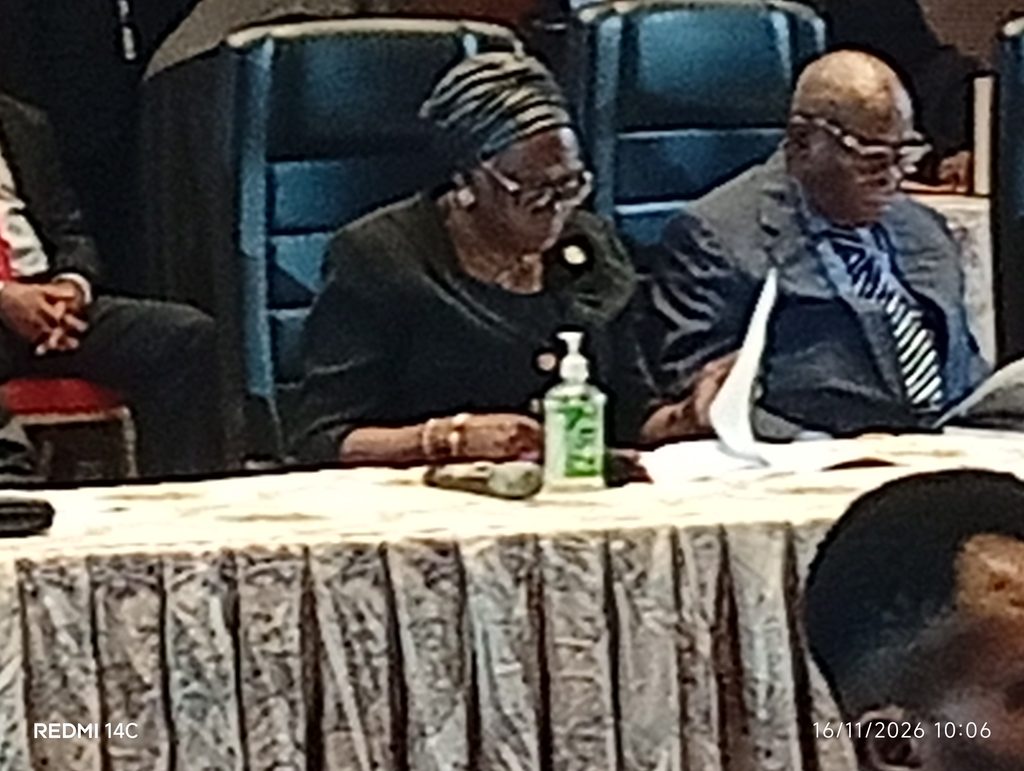
Speaking on Monday at the opening of the 2026 All Nigeria Judges’ Conference of the Lower Courts, held at the Andrews Otutu Obaseki Auditorium, Mohammed Bello Centre, National Judicial Institute (NJI), Abuja, the CJN said the judiciary’s reputation is “built every day in courtrooms across the country,” not only by the landmark decisions of the Supreme Court.
Justice Kekere-Ekun, who is also Chairman of the NJI Board of Governors, told the Magistrate, Sharia, Area and Customary Court judges that delay hits ordinary litigants hardest, as they spend scarce resources on travel, legal fees and repeated adjournments.
She acknowledged that inadequate facilities, insufficient manpower and limited resources were genuine challenges to be brought to the attention of the appropriate authorities. But she insisted that some causes of delay could be tackled “through personal discipline and effective courtroom management.”
“I urge you to take ownership of the proceedings before you,” she said, asking judges to monitor their cause lists, identify long-pending matters and refuse to let adjournments become routine. She also cautioned against being “stampeded into making hasty decisions.”
On punctuality, she said it was unfair to expect litigants who may have travelled long distances to arrive at court only to find it would not sit, when timely notice could have been given.
The CJN stressed that being unrepresented, poorly educated or financially disadvantaged must never diminish the fairness a person is entitled to. “A judge can be firm without being discourteous, and can maintain order without humiliating anyone,” she said.
She told judges to stay within their jurisdictions. Those administering customary and personal law, she said, must ascertain the applicable customary law rather than rely on assumptions, and apply it consistently with the Constitution and fundamental rights.
In criminal matters, she said the presumption of innocence must be respected and the prosecution held to its burden of proof. “The liberty of a person must never be treated casually,” she said, adding that criminal cases must also be concluded in good time.
On technology, Justice Kekere-Ekun cited the Nigerian Case Management System as part of the judiciary’s effort to modernise court administration, but warned that people without access to digital facilities must not be excluded from justice.
She encouraged judges to understand artificial intelligence but approach it with caution. Authorities generated by AI tools, she said, must be independently verified because such systems “can produce inaccurate or entirely fabricated material.”
“The evaluation of evidence, determination of disputed facts and exercise of judicial discretion cannot be delegated to artificial intelligence,” she said. “Technology should assist that responsibility, never replace it.”
She also urged judges to guard against improper influence and conflicts of interest, and called on senior officers to mentor younger colleagues.
In his welcome address, the NJI Administrator, Hon. Justice B.A. Adejumo, OFR, described the biennial conference as the “largest, most significant, and strategic convergence” of judicial actors whose work is indispensable to the rule of law.
Justice Adejumo said he recently saw AI deployed to support judicial decision-making, under full human oversight, at the 15th United Nations Congress on Crime Prevention and Criminal Justice in Abu Dhabi. He rejected the belief that technology would only “trickle down” to the lower courts over a long period, and urged their judges to become proactive.
He recommended the free online course on AI, Justice and the Rule of Law, launched by UNESCO and the University of Oxford.
Innovation, he added, goes beyond technology. He told the judges to “think outside the box,” noting that building the judiciary “does not rest solely on your Heads of Courts.”
He said judges who had completed the Training of Trainers programmes, run with the Judicial College of England and Wales, were expected to train colleagues in their states, and that the Institute would visit several states next year to observe the results. He cautioned that innovation must stay within ethical bounds and must not undermine the authority of Heads of Courts.
The Administrator also commended the revival of the Magistrates’ Association of Nigeria after several years of inactivity. He urged it and the Sharia and Area Court Judges Association of Nigeria to work together rather than as separate bodies.
Justice Kekere-Ekun said the true measure of the conference would not be “the number of papers presented or resolutions adopted,” but how far its deliberations improved the lower courts. She commended the NJI and the Education Committee of its Board of Governors, chaired by Hon. Justice John Inyang Okoro, CFR, JSC, before declaring the conference open.
The conference is themed “Enhancing Effective Justice Delivery Through Innovation and Institutional Efficiency.”
Former Chief Justices of Nigeria, Justice Mahmud Mohammed and Justice Walter Onnoghen, were among the dignitaries present, alongside other retired justices of the Federation and members of the bench.