Dare Adeleke, a chieftain of the Allied Peoples Movement (APM) and Special Adviser to Oyo State Governor Seyi Makinde, has defended the governor’s Ibadan heritage, describing him as an indigene deeply rooted in the history and traditions of the ancient city.
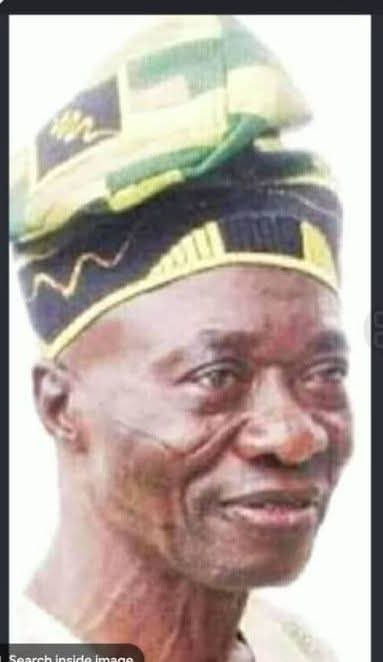
Adeleke, in a Facebook post titled “See the Face of Ibadan Original! – A Reply to Diran Odeyemi on Seyi Makinde’s Heritage”, presented the late Pa Olatubosun Makinde, the governor’s father, as evidence of the family’s ancestral ties to Ibadan.
He identified the late Makinde as a native of Ile Aigbofa, Oja-Oba, Ward 1, in Ibadan South-East, and highlighted his facial tribal mark, known as Gombo, which he described as a traditional mark associated with Ibadan warriors and prominent historical figures.
According to Adeleke, the late Makinde was a respected teacher trained at St Luke’s Demonstration School, Molete, an accomplished scholar who passed British examinations through correspondence, and a banker who passed the examinations of the Association of International Bankers (AIB) and worked with Wema Bank.
He also described the governor’s father as a devout Christian who served as a church warden for seven years, portraying him as a man whose educational, professional and religious accomplishments reflected his standing in the community.
Adeleke’s intervention followed comments attributed to Diran Odeyemi questioning Makinde’s connection to Ibadan and his confidence in the city. The APM chieftain dismissed the criticism, insisting that the governor’s family background and ancestral compound firmly established his roots in Ibadan.
“ Seyi Makinde is Ibadan to the bone marrow,” Adeleke declared, arguing that the governor’s heritage could not reasonably be separated from the city’s history and identity.
He also invoked the Yoruba saying, “Ile la ti n ko eso rode”, meaning that charity begins at home, to defend Makinde’s political engagements across the South-West.
According to him, the governor’s political outreach in other states within the geopolitical zone, including Ondo, Osun, Ekiti and Lagos, should not be interpreted as evidence of detachment from Ibadan or Oyo State.
Drawing a comparison with President Bola Tinubu, Adeleke questioned why Makinde’s political activities outside his home state should attract criticism when Tinubu had also undertaken political engagements beyond his immediate home base.
The APM chieftain further alleged that Odeyemi’s criticism was part of a politically sponsored campaign against Makinde, claiming that former Rivers State governor Nyesom Wike was behind the attacks because of disagreements with the Oyo governor. Adeleke, however, provided no evidence in the post to substantiate the allegation.
Makinde and Wike have been associated with political disagreements within the Peoples Democratic Party (PDP), reflecting wider divisions over the party’s leadership and direction.
Despite the criticism, Adeleke expressed confidence in Makinde’s political future, predicting that the governor could emerge as a presidential contender.
He maintained that Makinde’s record in Oyo State and his ancestral connection to Ibadan would remain central to his political identity, concluding that the governor’s roots in the city were beyond dispute.
“Oyo State is Seyi Makinde. Seyi Makinde is Ibadan,” Adeleke wrote.