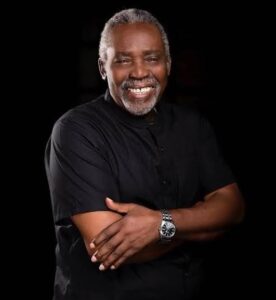
IJEBU-ODE — Fresh controversy has engulfed the race to produce the next Awujale of Ijebuland, with questions continuing to trail the eligibility of Prince Ademorin Aliu Kuye amid allegations that influential political interests are quietly backing his candidacy despite what critics describe as significant customary and genealogical hurdles.
The latest dispute has reignited debate over the integrity of the traditional succession process following claims that efforts are being made to present Prince Kuye as a candidate from the Fusengbuwa Ruling House, the royal lineage currently entitled to produce the next Awujale.
Opponents of the move insist that while the Kuye family remains one of the most prominent branches of the Gbelegbuwa Ruling House, any attempt to classify Prince Kuye as a Fusengbuwa prince for succession purposes amounts to a distortion of established history and customary practice.
According to some traditional stakeholders, the controversy bears similarities to previous succession disputes in which aspirants allegedly sought to navigate long-established traditions through political influence and public relations campaigns.
“A simple question exposes the contradiction,” a prominent stakeholder said. “Why was Prince Kuye never conferred with an Otunba title by the Fusengbuwa Ruling House during the reign of the late Awujale, Oba Sikiru Kayode Adetona, if he truly belonged to that lineage?”
Critics argue that traditional titles are not awarded retrospectively to support future ambitions but are rooted in long-established customs that define identity, ancestry and succession rights.
They also point to Prince Kuye’s acceptance of the Otunba Ajana title, which they maintain is traditionally associated with the Gbelegbuwa Ruling House.
“Custom does not bend to convenience,” another stakeholder said. “It is difficult to reconcile decades of identification with Gbelegbuwa ancestry and then seek recognition under Fusengbuwa when a succession opportunity arises.”
The debate has further drawn attention to the role of Otunba title holders in the Awujale succession process. Opponents maintain that Otunbaship has never historically served as a pathway to the throne but has traditionally been reserved for royal descendants outside the direct line of succession.
“History is clear and customary law is settled,” a stakeholder stated. “Supporters of the candidacy should point to any previous Awujale who ascended the throne while holding an Otunba title.”
Observers say the succession contest has increasingly taken on the character of a political campaign, with aspirants and their supporters deploying social media engagements, media campaigns and public relations efforts to strengthen their positions.
There have also been reports of intense lobbying and attempts to influence public opinion, developments that some traditionalists fear could undermine the sanctity of the revered institution.
While many contenders possess distinguished academic and professional credentials, stakeholders insist that educational achievements alone cannot determine eligibility for the throne.
According to them, a deep understanding of Ijebu history, language, customs and cultural heritage remains central to the institution of the Awujale.
“Beyond academic qualifications, the critical issue is verifiable descent from Oba Adejoko Fusengbuwa, whose ruling house is next in line to occupy the throne,” a stakeholder said. “No amount of political support, financial influence or media campaigns can substitute for legitimacy of lineage.”
However, supporters of Prince Kuye have rejected claims questioning his eligibility, insisting that he is a bona fide prince with an established royal pedigree and possesses the character, experience and leadership qualities required for the prestigious stool.
They argue that attempts to disqualify him are politically motivated and aimed at undermining a candidate widely regarded as accomplished and capable of providing visionary leadership for Ijebuland.
According to his supporters, Prince Kuye’s public service record, extensive contributions to community development and commitment to the progress of Ijebuland make him eminently qualified for consideration.
They further contend that the ongoing debate should be resolved through established traditional mechanisms and documentary evidence rather than public campaigns and media controversies.
Meanwhile, the Ogun State Government has repeatedly denied allegations that it is attempting to impose any candidate on Ijebuland.
Government officials have maintained that the administration’s role is limited to ensuring that due process is followed in accordance with applicable laws and recognised traditional procedures.
The government has consistently insisted that the eventual occupant of the throne must emerge through the established succession process and not through political interference.
As the selection process enters a decisive phase, calls are growing for strict adherence to tradition and documentary verification of lineage in determining those eligible to contest for the coveted stool.
For many observers, the controversy surrounding Prince Kuye’s candidacy has become a defining test of whether longstanding Ijebu customs will prevail over political considerations.
“The issue is not wealth, education or political connections,” a stakeholder said. “The issue is legitimacy. The next Awujale must emerge from the rightful lineage. Anything less would amount to a betrayal of history and tradition.”
With the final decision drawing closer, the succession battle continues to divide opinion across Ijebuland, where many maintain that only a candidate with unquestionable roots in the Fusengbuwa Ruling House should be considered for the throne.