Abuja — August 14, 2026
The Nigerian Geological Survey Agency (NGSA) has confirmed that the earth tremor recorded in parts of the Federal Capital Territory on August 4 caused no structural damage to buildings in the affected areas.
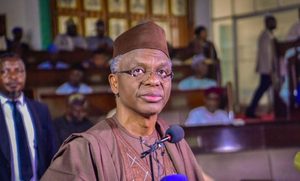
Director-General of NGSA, Prof. Segun Ige, disclosed this on Thursday at a news conference in Abuja, where he presented findings from the agency’s assessment of the tremor.
The tremor had affected the logistics unit of the Defence Intelligence Agency, Mambila Barracks in Asokoro, part of the NNPC Towers, and some buildings within the Central Business District. It was detected by the NGSA Seismic Monitoring Station in Utako, which traced its origin to a depth of one kilometre. The tremor propagated over four kilometres within five seconds, a pattern that classified it as a light seismic event.
Ige said the agency’s monitoring team inspected the affected structures and found no evidence of damage or injury linked to the tremor.
“NGSA maintains that the very low magnitude and isolated nature of the tremor makes it a micro-event,” he said. “It lacked the required energy to damage building foundations, cause cracks on walls or trigger secondary hazards as being envisaged by communities or people around.”
He added: “It, therefore, posed no threats to life and properties except for the discomfort of the shake.”
Ige disclosed that NGSA operates five seismic monitoring stations — at the University of Abuja, Gwagwalada; Nasarawa State University, Keffi; Veritas University, Bwari; the agency’s headquarters in Utako; as well as facilities in Kaduna and Ilorin. He, however, lamented that the current number of stations falls short of what is required for effective nationwide monitoring.
The NGSA boss commended President Bola Tinubu for his commitment to repositioning the solid minerals sector, and praised the Minister of Solid Minerals Development, Dele Alake, for driving reforms in the sector.
He called for increased funding to strengthen the agency’s monitoring capacity and proposed measures to address recurring tremors across the country.
“The government should expand the NGSA monitoring station with adequate logistics such as funding and other infrastructures for effective monitoring and computation of accurate results,” he said. “We have come to understand that the more monitoring stations we have, the better the resolution of the results and the faster we receive information, especially when they are located in areas prone to such occurrences.”
He also urged the Minister of Solid Minerals to mandate quarry and mine operators to install seismic monitoring meters at their sites to complement government-run stations.
Ige further advised relevant government agencies to require a “Notice of Mandatory Application” for structural configuration data from NGSA before siting major infrastructure such as dams, bridges, rail lines, airports, and skyscrapers. He stressed the need to certify soil and rock conditions before construction and called on the Federal Government to empower NGSA to certify geotechnical and geological reports.
“It will also let us know structures that will be susceptible to tremor and those that will be resistant to tremor,” he said.
He recommended regular infrastructure maintenance, periodic reporting to relevant agencies, and stronger enforcement of seismic building codes for heavy infrastructure and industrial projects in Abuja and other cities. According to him, construction companies should use strong steel and reinforced concrete, with roofs and frames firmly bolted to foundations.
Ige also called for capacity building for NGSA staff on new technologies for data management and emergency response, stressing the importance of public education on standard earthquake safety protocols.
He urged residents who notice unusual ground vibrations or have concerns about seismic activity to contact the NGSA emergency line on 09139442811.