The Presidency has criticised former Vice-President Atiku Abubakar over his position on petrol subsidy, accusing him of offering conflicting explanations and turning the economic difficulties facing Nigerians into a political issue.
Special Adviser to the President on Information and Strategy, Bayo Onanuga, made the accusation in a statement on Wednesday, saying Atiku and his aides had presented three different positions on the proposed subsidy policy within one week.
According to Onanuga, the conflicting statements have raised questions about whether Atiku has a clearly defined economic policy or is responding politically to the temporary hardship faced by Nigerians.
He said Atiku’s spokesperson, Paul Ibe, initially stated that the former Vice-President would restore petrol subsidy if elected but would later phase it out as a temporary measure to allow Nigerians and businesses to recover.
Onanuga said another aide, Phrank Shaibu, subsequently rejected that position as an “unauthorised and misleading characterisation” of Atiku’s policy.
Shaibu, he said, maintained that the subsidy would remain until domestic refining capacity expanded, fuel supply stabilised and competition increased.
“Just hours later, Atiku himself intervened and effectively overruled that clarification. He insisted that his position ‘has not changed’ and that he would restore what he called a ‘targeted subsidy’ if elected president,” Onanuga said.
He quoted Atiku as saying: “I will restore targeted subsidy and put purchasing power back in the hands of Nigerians.”
Onanuga described the different explanations as a major policy contradiction, saying Nigerians deserved clarity rather than what he termed “policy by trial and error.”
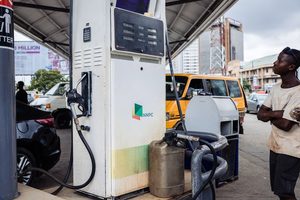
The presidential aide also challenged Atiku’s argument that restoring petrol subsidy would automatically reduce the cost of living. He said pump prices were influenced by several factors, including international crude oil prices, exchange rates, refining costs, transportation and distribution expenses.
While acknowledging that energy and transportation costs affect food prices, Onanuga said petrol prices alone could not account for Nigeria’s food inflation.
“Agricultural productivity, insecurity, exchange rates, logistics, storage, flooding, input costs, money supply and supply constraints also matter,” he said.
According to him, the administration of President Bola Tinubu has been addressing these structural challenges rather than reducing the country’s cost-of-living crisis to petrol prices alone.
Onanuga also challenged Atiku to provide details of his proposed “targeted subsidy”, including its estimated cost, beneficiaries, funding source and the economic conditions that would determine when the policy would be terminated.
“Nigerians cannot afford another opaque and potentially costly subsidy regime dressed up in new language,” he said.
The presidential aide further questioned Atiku’s proposal to link the subsidy to crude oil prices, arguing that refining a barrel of crude produces several petroleum products besides petrol.
He said petrol accounts for about 45 per cent of the products derived from a refined barrel, while diesel, aviation fuel, kerosene and other products make up significant portions.
Onanuga noted that diesel was deregulated in 2004 under the administration in which Atiku served as Vice-President, while kerosene and aviation fuel were deregulated subsequently.
He also listed other products obtained from crude oil refining, including petrochemical feedstocks, asphalt, hydrocarbon gas liquids, lubricants, waxes, petroleum coke and sulphur.
He therefore questioned whether Atiku’s proposed subsidy would also cover those products if the policy were tied to the price of crude oil.
“Will Atiku subsidise all these by-products of the barrel as well, since kerosene is used by the underprivileged to cook, and many homes and factories use diesel to power generators and delivery trucks?” he asked.
Onanuga further questioned whether refineries receiving discounted crude under such an arrangement would retain the profits generated from other products obtained from the same barrel.
He concluded by accusing Atiku of failing to provide sufficient clarity on the economic basis of his proposed subsidy policy.
“The economy is too serious for policy somersaults, incoherence, destructive populism and election gimmicks,” Onanuga said.