By Moji Danisa
Kenya’s confirmation of new Ebola cases has renewed concerns about the risk of the deadly disease spreading across Africa, placing countries such as Nigeria on alert over the possibility of imported infections and the capacity of their healthcare systems to contain an outbreak.
Although geographical distance may appear to offer Nigeria some protection, the movement of people across international borders, busy airports, commercial routes and informal crossings means that no African country can afford to treat the threat casually. The central question is whether Nigeria can detect an imported infection quickly enough to prevent it from developing into a wider public-health emergency.
The Kenyan outbreak is particularly concerning because it involves the Bundibugyo virus, a species of Ebola virus for which there is currently no approved vaccine or specific licensed treatment. The outbreak has also highlighted the danger of transmission within healthcare facilities when infected patients are not identified promptly and adequate infection-control procedures are not followed.
Ebola is transmitted primarily through direct contact with the blood or other bodily fluids of an infected person who has developed symptoms, or through contaminated objects and materials. Contact with the body of someone who has died from the disease can also result in infection. Unlike influenza or measles, Ebola does not ordinarily spread through the air simply because people occupy the same room.
However, the disease’s incubation period, which can range from two to 21 days, creates a significant challenge for public-health authorities. An infected person may travel through several locations before becoming visibly ill, making it difficult to identify everyone who may have been exposed.
For Nigeria, the implications are considerable. As Africa’s most populous country, with extensive commercial links, international air connections and busy land borders, it faces the challenge of monitoring a vast movement of people without unnecessarily disrupting trade and legitimate travel.
Nigeria’s exposure is not determined by its distance from Kenya alone. The possibility of transmission depends on the movement of infected individuals, the locations through which they travel, the effectiveness of screening and the speed with which health authorities investigate suspected cases.
The Nigeria Centre for Disease Control and Prevention had already identified the threat posed by the evolving Bundibugyo Ebola outbreak in an advisory issued in May 2026. The agency assessed the risk of importing the virus as high, citing regional transmission, international travel, porous land borders, transport hubs and population movement. At the time, it reported no confirmed cases of that outbreak in Nigeria.
In October, the NCDC also reported ongoing preparedness activities involving federal and state authorities, including measures for early detection, isolation, laboratory diagnosis, contact tracing and infection prevention. A national preparedness simulation exercise was conducted to test response arrangements and identify gaps. The agency reported no confirmed Ebola cases in Nigeria as of October 6.
These measures are encouraging, but preparedness must be judged by the country’s ability to respond effectively under real conditions rather than by the existence of plans and official assurances alone.
Nigeria’s successful containment of an imported Ebola outbreak in 2014 demonstrated that a coordinated response can prevent the disease from spreading widely. Rapid identification of the index case, isolation, contact tracing and effective cooperation among health authorities were central to that achievement. The experience remains an important national asset, but it does not guarantee that another outbreak would be contained with equal success.
The circumstances surrounding the current outbreak are different, and Nigeria must ensure that the lessons of 2014 have been translated into sustained investment in public-health infrastructure, trained personnel, laboratory capacity and emergency response systems.
The first priority should be stronger surveillance at international airports, seaports and land borders. Port health officials must be adequately trained and equipped to identify travellers who may have been exposed to the virus, assess their travel histories and refer suspected cases for further investigation. Temperature screening alone is insufficient because fever has many causes and an infected person may not yet have developed symptoms.
Border surveillance must also extend beyond formal entry points. Nigeria’s extensive informal crossing routes and movement between neighbouring countries create vulnerabilities that cannot be addressed through airport checks alone. Cooperation among health officials, immigration authorities, security agencies and neighbouring countries is therefore essential.
The government must also establish effective communication channels with Kenya, the Democratic Republic of the Congo, Uganda and other countries affected by the outbreak. Information about new cases, exposure locations and potentially infected travellers must reach Nigerian authorities promptly. Regional cooperation can help identify people at risk before they unknowingly expose others.
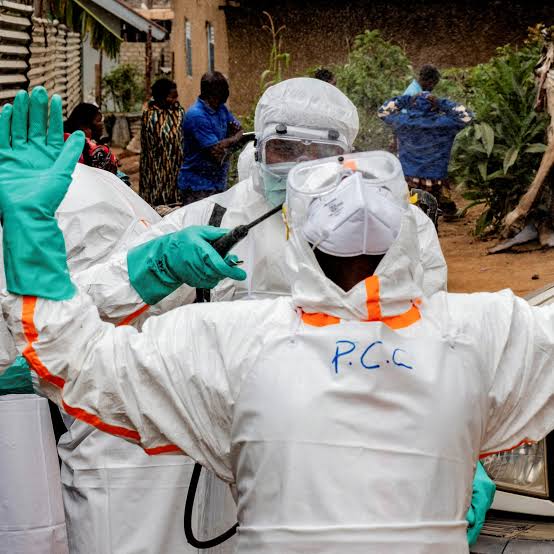
Equally important is the capacity of Nigerian hospitals to manage suspected cases safely. Every state should have clear procedures for reporting, testing, isolating and referring patients. Healthcare workers must receive practical training in infection prevention, the proper use of protective equipment, safe patient transfers and the handling of contaminated materials.
The experience in Kenya underlines why hospitals can become places of transmission when suspected cases are not recognised early. A single missed diagnosis can expose healthcare workers, patients and caregivers, creating additional demands on an already stretched health system.
Nigeria must therefore ensure that designated isolation facilities are operational, protective equipment and essential supplies are readily available, laboratories can deliver reliable results promptly, and emergency transport services can move suspected patients safely. It must also assess whether these capabilities extend beyond major cities to rural communities and states with fewer specialist medical facilities.
Contact tracing will be crucial if an imported case is detected. Health authorities must identify people who had relevant exposure, assess their risk and monitor them for 21 days after their last exposure, following established public-health guidance. This requires trained personnel, reliable communication and sufficient resources to follow up contacts without delay.
The absence of an approved vaccine or specific licensed treatment for Bundibugyo virus makes these preventive measures even more important. Although medical teams can provide supportive care, manage complications and treat associated conditions, there is no guarantee of recovery. Nigeria must also avoid assuming that vaccines or treatments developed for other Ebola virus species will necessarily be effective against Bundibugyo.
Public education is another essential component of preparedness. Nigerians should be encouraged to practise regular handwashing, avoid direct contact with the bodily fluids of anyone suspected of having Ebola and follow official health advice. Anyone who develops compatible symptoms after travelling to an affected area or having a relevant exposure should promptly contact a recognised healthcare facility or public-health authority and disclose the circumstances.
At the same time, authorities must communicate responsibly to prevent panic, misinformation and the stigmatisation of travellers from affected countries. Fever, fatigue, headaches and muscle pain occur in many illnesses, including malaria. Such symptoms do not automatically indicate Ebola, and diagnosis requires appropriate medical assessment and testing.
Beyond immediate border protection, the outbreak presents Nigeria with an opportunity to examine the resilience of its healthcare system. Can suspected cases be identified in every state? Are laboratory services sufficiently accessible? Are isolation facilities adequately staffed? Can protective equipment be replenished quickly during an emergency? Are local health authorities able to trace contacts across crowded communities and informal transport networks?
These are questions that require transparent assessment, practical testing and prompt corrective action. A preparedness exercise is useful only if the weaknesses it identifies are addressed before a real emergency occurs.
Kenya’s experience is a reminder that infectious diseases do not respect national boundaries. An outbreak can begin in one country, move through regional transport networks and create challenges for distant nations before the full scale of the threat becomes apparent.
Nigeria has the experience and public-health structures to mount a response, but the effectiveness of those structures will depend on sustained funding, coordination and readiness at every level of government. The latest developments in Kenya should prompt renewed vigilance, not complacency or panic.
Ultimately, Nigeria’s greatest defence against Ebola is the ability to identify an imported infection early, protect healthcare workers, trace and monitor exposed individuals and prevent further transmission. The time to strengthen those defences is before the virus reaches the country’s borders, not after the first case has been confirmed.